
When we want to communicate, under normal circumstances, we just reach for our cell phone and either call or text someone. What happens when the telecommunications grid is down? Sure, a landline will work, but even those are reliant on communication grids and are not always available under the most extreme conditions. In this situation, and assuming you don’t have access to a HAM or CB radio, the next best way to communicate is to use handheld 2 way radios.
Most cheap 2 ways from big box stores do not work very well. They have almost no range, no options, and are cheaply made. You will want a quality set of professional grade handhelds. The ones included in your GoBox are high quality, rechargeable, have 16 channels and are programmable. These UHF (Ultra High Frequency) radios also boast a 3 mile range in ideal conditions. All 16 channels operate on the FRS (Family Radio Service) band and there is no license required to operate them and are extremely easy to use.
Being pre programmed for FRS makes these a great choice due to the fact that all blister pack radios available to the public usually operate on the same 22 channel frequencies. That allows anyone who has a set of FRS radios the ability to use them with other manufacturers brands which multiplies your exposure within your area. This service was set up and designed by the FCC to be available free of charge to anyone who desires to use it. Free communication is the best communication and will be reliable in most situations. That is a win when you are trying to communicate with your group and coordinate your efforts.
As previously stated, the FRS radios operate with all radios programmed to the same frequencies (there are only 22) and do not technically have privacy settings. So, if your goal is to stay low key and off the radar, it’s best to listen to the frequencies first, then determine which ones are not being used locally to avoid looting, capture, or other harm to your group.
If you are tech saavy and opt to purchase a UHF radio that you can either directly enter or pre program a frequency, that’s ok too! It costs more to go this route, however, you have a wide range of options above the standard FRS radios. Here is a list for FRS frequencies for your reference:
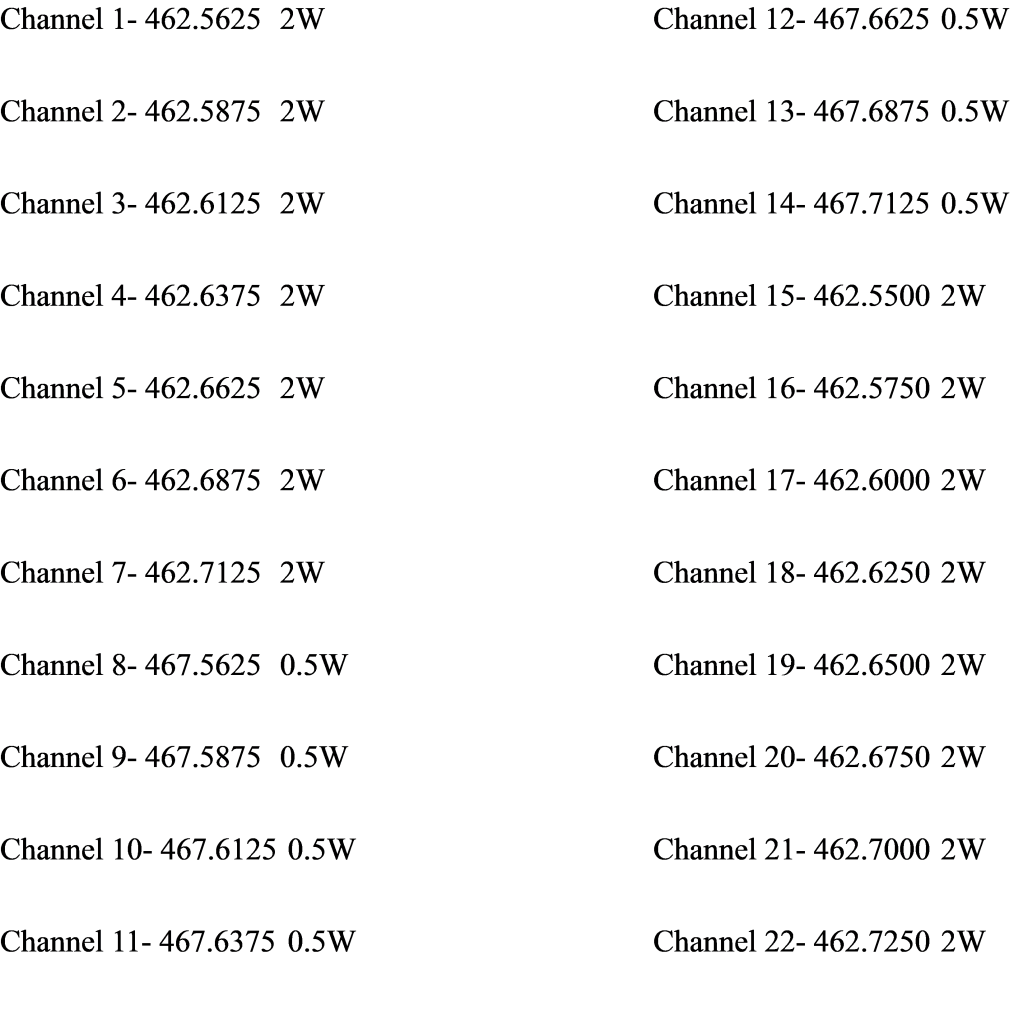
Each 7 digit frequency must be programmed into your radio and the power rating, or W (wattage) is listed after each one. Input this when you program your frequencies. The power setting is required to use the channel properly, otherwise, you may have a scrambled transmission and make it impossible to hear.
Don’t forget to practice using your radios with your group or family to get everyone accustomed to using them properly!
 GoBox
GoBox 